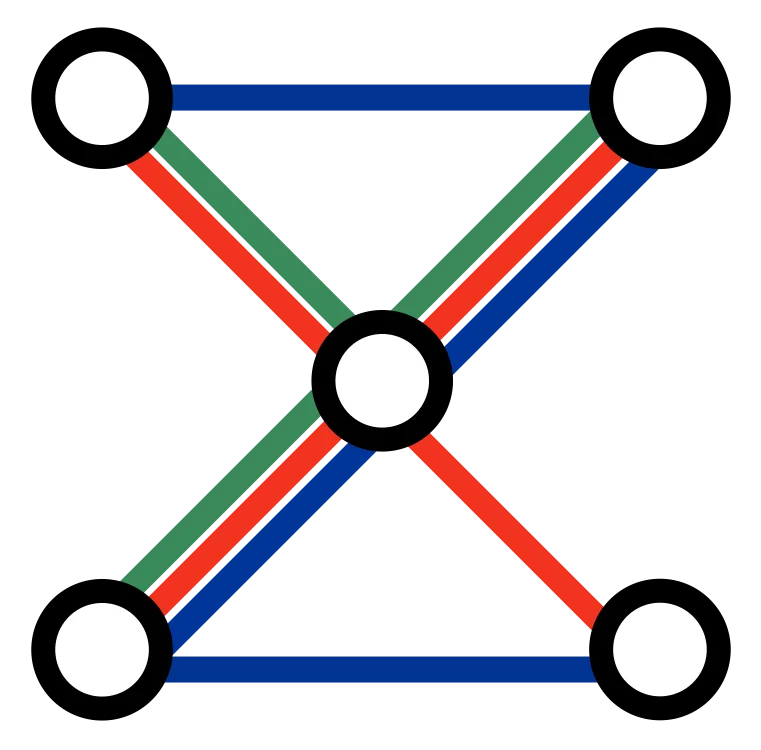

Most teams still talk about agents as if the interesting part were the conversation. It is not. The interesting part is the workflow. A closed-loop system is what turns an agentic setup from a clever interface into actual labor: a task enters the system, agents move it through a defined sequence of steps, and the system produces a real output that can be checked, shipped, or used.
That loop can be linear or non-linear. One agent may inspect a problem, another may classify it, another may propose a fix, another may implement it, and another may verify the result. In more advanced systems, the path branches. A failed verification can send the work back to engineering, a weak research result can trigger more investigation, and a low-confidence answer can escalate to review. What matters is not the shape of the path but the fact that the path closes.
This is why a bug-finding loop is such a useful example. An agent can monitor logs, detect regressions, open an issue, reproduce the failure, generate a patch, run tests, confirm the fix, document what changed, and then resume watching the system. Once that chain is stable, you no longer have isolated automations. You have a working cycle of maintenance.
Websites are one of the clearest early examples because they already sit inside structured systems: repositories, content folders, analytics, search data, deployment pipelines, and validation checks. A closed-loop website can keep itself current by finding broken links, updating stale copy, improving search visibility, refining page structure, and feeding what it learns back into the next round of changes. It starts to behave less like a static asset and more like an operating system for the business.
The same logic applies even more strongly to SaaS products. A product can observe user behavior, collect support feedback, compare competitor changes, identify gaps, draft feature specs, implement bounded improvements, test them, release them carefully, and then measure the effect. If the loop is designed well, the product is not only being maintained. It is also learning from its environment and using that learning to evolve.
This is where productivity changes meaning. In a closed-loop system, productivity is not just faster output from one model or one employee. It is the ability to keep work moving through a chain of specialized roles without losing context, standards, or momentum. Each pass through the loop creates another unit of useful labor, and the system can keep running long after a human has defined the rules, approvals, and constraints.
That points to a different future for software. Instead of software being a passive tool that waits for human operators, more of it will behave like an active economic unit around a narrow mission. A website can maintain and improve itself. A product can observe, propose, test, and refine itself. A service business can run specialist loops around sales, delivery, support, reporting, and content. The software does not need mystical general intelligence to do this. It needs structure.
The practical challenge is to design loops that stay useful instead of becoming expensive motion. That means clear handoffs, explicit quality checks, scoped permissions, and outputs that can be measured against business goals. Teams that learn to build these loops well will not just use agentic systems as assistants. They will use them to create self-improving operational surfaces, which is much closer to the real future of software.
One useful mental model is automated trading. In financial markets, a system observes conditions, places trades, measures outcomes, adjusts, and runs the next cycle without pausing to admire its own logic. SaaS growth systems already work in a similar way at a slower human pace: teams change a landing page, adjust a funnel, measure conversion, refine the message, and run the next experiment. That is already a closed loop. The difference now is that companies can engineer to determine the next best action by themselves based on what their previous changes actually did to the profitability of the service. When the loop is pointed at the right goals, constrained properly, and allowed to keep learning, it stops being a helpful automation and starts becoming a compounding system for growth.