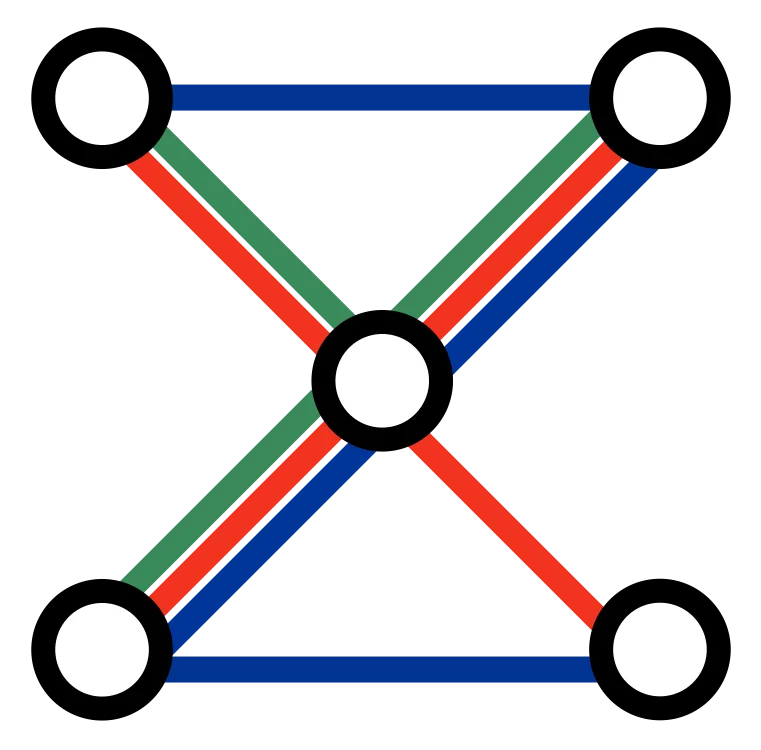

AI is starting to level production capacity.
That sounds like a statement about technology. It is really a statement about competition.
For decades, many ideas died because production was too expensive. A founder could not afford the prototype. A marketing team could not get enough design and development time. An operator could see the workflow problem clearly but could not turn it into software. A small company could imagine a better customer experience and still lack the budget, people, or technical path to build it.
AI is starting to weaken that constraint.
A person with a clear goal can now generate code, drafts, images, research summaries, workflows, data transforms, sales materials, landing pages, and internal tools at a speed that would have seemed unrealistic a few years ago. The quality still varies. The work still needs review. Real systems still need architecture, security, data discipline, and ownership. The pattern is visible: production is becoming cheaper, faster, and more broadly available.
The ironic result is that more technology may make human creativity more valuable.
When everybody can produce, production becomes a weaker moat. The advantage moves upstream to the quality of the idea.
The old bottleneck was execution
Execution used to be the filter.
If you wanted a new product, you needed a team. If you wanted a campaign, you needed budget. If you wanted a dashboard, you needed engineering time. If you wanted a useful internal tool, you needed someone who could translate a business process into working software.
That filter blocked bad ideas. It also blocked a lot of good ones.
The cost of execution meant teams had to ration attempts. They wrote business cases before testing obvious things. They waited for roadmaps. They asked permission from overloaded departments. They merged three small ideas into one larger project because there was only enough budget to build once.
This made organizations look more disciplined than they really were. Many were simply constrained.
AI changes the shape of that constraint. The first version of an idea can now become visible quickly. A workflow can become a prototype. A pitch can become a deck. A service concept can become a landing page. A messy internal process can become a rough tool that proves whether the problem is real.
That is useful. It also exposes a harder question: if execution is no longer the strongest filter, how good are the ideas?
The new battleground is better ideas
If everybody can create a website, a website is no longer the interesting part.
If everybody can generate a deck, the deck is no longer the advantage.
If everybody can prototype a tool, the prototype is no longer the scarce asset.
The scarce asset becomes the idea behind the artifact. The angle. The insight. The timing. The taste. The understanding of the customer. The ability to see which problem is worth solving and which one only looks urgent because the tool makes it easy to touch.
This is where AI becomes uncomfortable for companies that treated production capacity as strategy. A team that won because it could simply make more things may find that making more things is no longer enough. Competitors can make more things too. Smaller teams can now produce outputs that look polished, move quickly, and test the same market faster than before.
The gap shifts from “who can make it?” to “who knows what should exist?”
That is a more human question.
Better ideas come from attention. They come from being close to customers, noticing repeated friction, understanding timing, and having the courage to remove weak concepts early. Better ideas come from taste: the ability to sense when something is useful, clear, humane, and commercially sharp. Better ideas also come from judgment: knowing when to automate, when to simplify, when to add human review, and when a problem does not deserve a system at all.
More technology does not remove those . It puts more pressure on them.
Creativity gets more operational
Creativity is often treated as a mysterious front-end activity: the name, the concept, the campaign, the visual, the line.
AI makes creativity more operational.
A good idea can now move through many forms quickly. It can become a blog post, a sales offer, a prototype, a customer email, a service page, a demo script, a pricing test, a workflow, or a training document. That does not make the original idea less important. It makes the idea easier to interrogate.
Does it survive contact with a customer use case?
Does it become clearer when expressed as software?
Does the landing page make the promise sharper or reveal that the promise is vague?
Does the workflow actually save time, or does it only move complexity somewhere else?
The creative act becomes less about producing one polished object and more about moving an idea through enough formats to find its strongest shape. This is close to the pattern we described in Getting Good Ideas Unstuck . AI helps ideas move. Human judgment decides whether the movement is useful.
The best teams will not use AI only as an output machine. They will use it as an idea-pressure system.
Level production does not mean level outcomes
The phrase “AI levels the playing field” can be misleading.
AI may give more people access to similar production capability. It will not give everyone the same taste, context, urgency, discipline, or courage.
Two teams can use the same model and get very different outcomes. One team asks for generic content and ships it because it looks finished. Another team uses the model to test ten angles, reject seven, improve two, and build one with a clearer customer promise. The tool may be the same. The thinking is not.
The same pattern applies to software. One company uses AI to generate another dashboard. Another uses AI to remove a painful approval loop, add a simple customer-facing tool, or turn a recurring expert decision into a supervised workflow. Both used technology. Only one improved the business.
The leveler gives access. It does not supply the idea.
This matters for small companies. Large companies used to have a structural advantage because they could pay for more execution. AI reduces some of that advantage. A small team with strong ideas, fast feedback loops, and clear taste can now look larger than it is. It can test more, ship more, and learn more without building a huge department first.
That does not make the small team automatically better. It gives the small team a chance to compete where it may already be strongest: focus, speed, customer closeness, and willingness to rethink the way work gets done.
The idea pipeline becomes a company asset
If ideas become the battleground, companies need to treat idea development as an operating system, not a workshop.
That means capturing friction when it appears. It means turning customer objections into experiments. It means giving operators a way to propose workflow improvements without writing a full business case. It means letting sales, support, delivery, and leadership push raw ideas into a process where they can be tested quickly.
AI can help with that process. It can turn a rough note into a sharper problem statement. It can compare several versions of a service promise. It can produce first drafts, prototypes, and simulations. It can help a team explore the consequences of an idea before spending serious money.
But the process still needs human standards.
Which customer problem is real?
Which idea fits the company strategy?
Which concept deserves a prototype?
Which prototype deserves production hardening?
Which output is good enough to test, and which one would damage trust if released?
Those are leadership questions, product questions, and operational questions. AI can support them. It should not be allowed to answer them alone.
Technology raises the floor and the ceiling
The most interesting effect of AI is not that it raises the floor. It does.
A weak writer can draft faster. A non-designer can explore layouts. A non-developer can create a prototype. A small business can generate assets, automations, and workflows that once required a larger team.
The deeper effect is that it raises the ceiling for people with strong ideas.
A good strategist can test more positions. A good operator can turn process knowledge into usable tools. A good founder can explore product directions without waiting months. A good creative team can move from concept to market expression with much less friction. A good domain expert can finally turn tacit knowledge into systems other people can use.
AI does not flatten excellence. It amplifies the gap between people who merely produce and people who think clearly.
That is the irony. More technology makes human ingenuity more visible. It removes some of the excuses that hid weak ideas behind limited production capacity. It also removes some of the barriers that kept strong ideas trapped inside people who could not execute them.
The work ahead
The next phase of competition is likely to reward teams that combine fast production with better thinking.
They will need tools, but tools will not be enough. They will need idea pipelines, review loops, customer feedback, operating standards, and taste. They will need to know when to use AI for speed and when to slow down for judgment. They will need to decide which ideas deserve automation, which deserve software, which deserve content, and which deserve to be killed.
This is where , AI operations layers , and AI workflows become practical. The goal is not only to make more things. The goal is to make the right things easier to test, improve, and operate.
AI will make it easier for everyone to create.
That will not make ideas cheap.
It will make better ideas matter more.